
Foundations
What is an Agent-Driven Organization?
An agent-driven organization uses AI agents as operational actors for execution, coordination, and decision-making, not only as assistive tools.
Read More »
The Foundation of Innovation
Your Gateway to a World of Knowledge
Short answer
The SysArt Knowledge Hub is a structured library of articles that helps leadership teams, architects, and practitioners understand AI operating models, systems thinking, agile foundations, and implementation trade-offs. It is designed to support both research-stage discovery and decision-stage evaluation.
Use the Knowledge Hub to move from foundational concepts into applied enterprise topics such as AI governance, on-prem AI, consulting selection, and implementation design.
— SysArt Consulting
Innovative Agile Insights
Welcome to our Insights Hub, your gateway to a world of knowledge and innovation. Here, we embark on a journey through the dynamic realm of Agile practices, offering you expert perspectives, best practices, and valuable insights to navigate the ever-evolving landscape of Agile development.
Whether you’re a seasoned Agile practitioner or just beginning your Agile journey, our hub is your destination for inspiration, learning, and staying at the forefront of Agile excellence. Join us as we explore the transformative power of Agile thinking and practices.
SysArt Consulting
Use these links to connect the article with relevant consulting services and practical guidance.
The Knowledge Hub gives decision-makers and practitioners a structured way to explore AI, systems thinking, agile foundations, and agent-driven operating models in one place.
No. It includes agile and systems-thinking material, but it also connects strongly to enterprise AI, governance, on-prem architecture, and organizational redesign.
Start with foundational definitions, move into comparison and implementation articles, and then follow the commercial pages when you need advisory or implementation support.
Yes. The hub is intentionally structured to connect educational articles with applied topics such as AI governance, on-prem AI, consulting selection, and enterprise implementation.
An agent-driven organization uses AI agents as operational actors for execution, coordination, and decision-making, not only as assistive tools.
Read More »
On-Prem AI means deploying and operating AI systems inside a company’s own infrastructure to maximize control, compliance, and predictability.
Read More »
AI Governance is the policy, process, and control framework that makes AI systems responsible, auditable, and enterprise-ready.
Read More » The core trade-off is simple: cloud AI optimizes speed of experimentation, while on-prem AI optimizes control, compliance, and long-term sustainability.
Read More »
Copilots help people work faster, while AI agents take initiative and act on behalf of the organization within defined boundaries.
Read More » Traditional automation optimizes predefined tasks, while agentic systems optimize outcomes in dynamic environments.
Read More »
Choosing the right AI consulting partner is a strategic decision that should be evaluated on enterprise experience, technical depth, governance, and execution capability.
Read More »
Enterprise AI implementation succeeds through architecture, governance, and incremental scaling, not through one large all-at-once program.
Read More »
EU AI transformation must combine capability building with compliant, controlled execution at scale under GDPR and the EU AI Act.
Read More » Retrieval-Augmented Generation combines search over trusted documents with large language models so answers stay grounded and auditable in enterprise settings.
Read More » Vector embeddings turn text or other data into numerical representations so systems can measure similarity, power search, and support RAG pipelines.
Read More » Fine-tuning adapts a pretrained language model to a specific style, domain, or task by training on curated examples—distinct from prompting alone or RAG.
Read More » LLM inference serving is the production stack that accepts prompts, runs models efficiently on GPUs or CPUs, and returns tokens with reliability and observability.
Read More » Human-in-the-loop designs keep people in approval, correction, or oversight roles so AI outputs meet risk, quality, and compliance bars in real organizations.
Read More »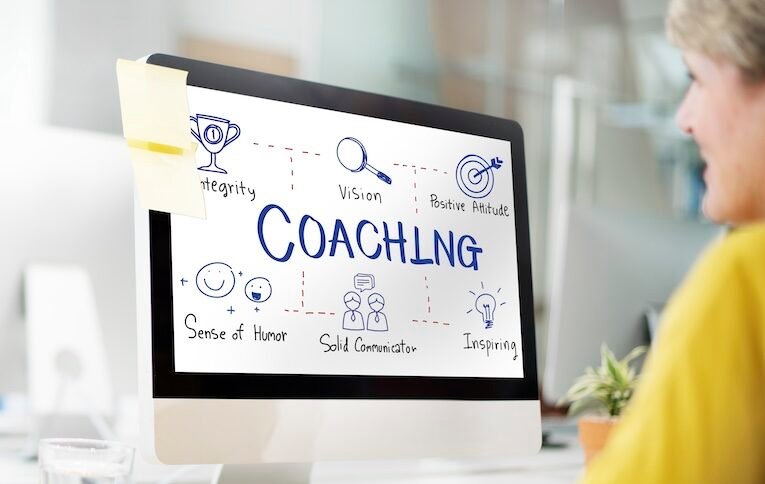
Coaching empowers individuals to maximize their potential, fostering self-awareness, goal clarity, and personal growth. Discover the transformative process and its varied applications for personal and professional development.
Read More »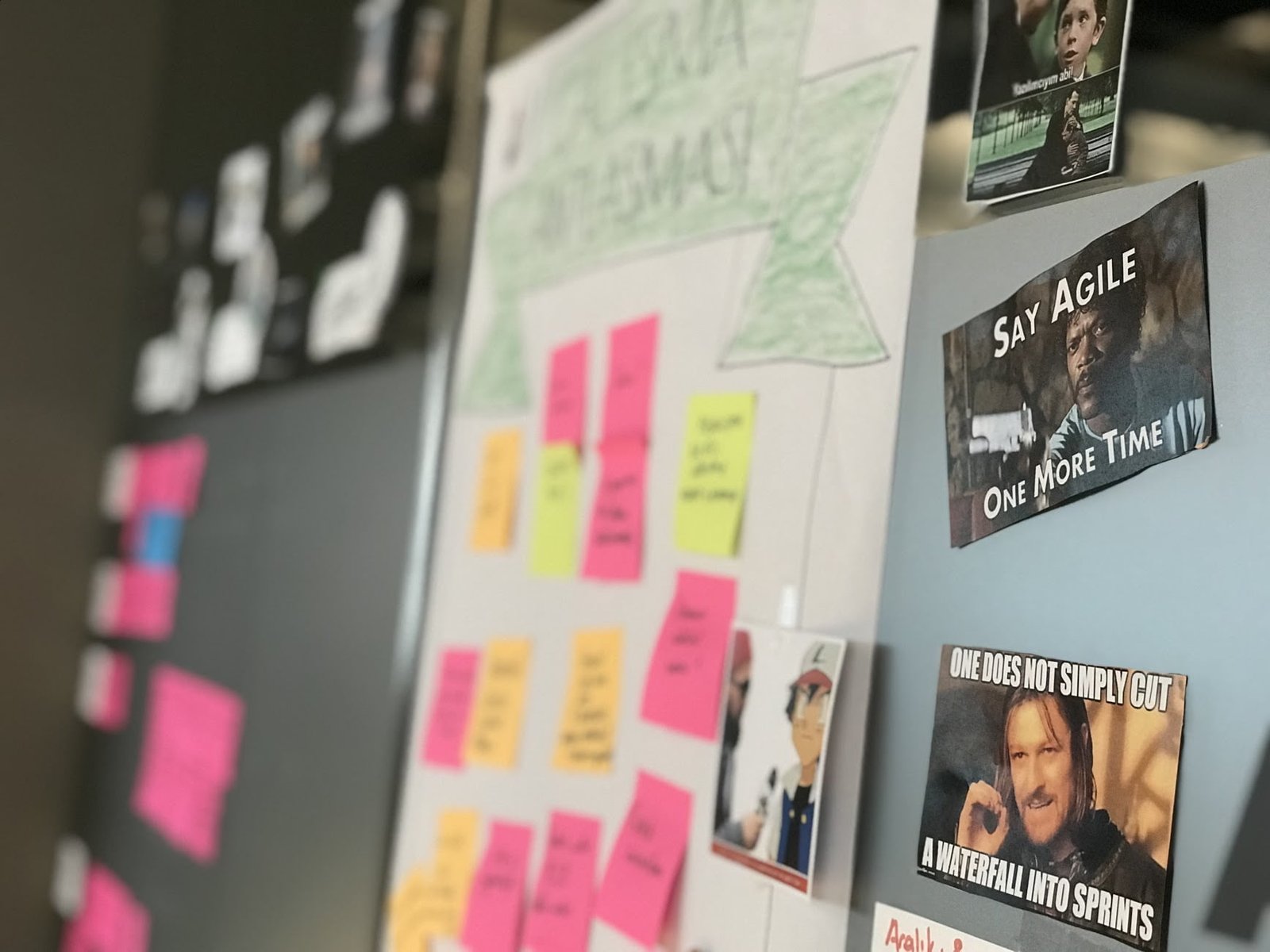
Explore the origins of Agile coaching, driven by the Agile Manifesto’s principles and Scrum practices. Agile coaches, pivotal across industries, foster collaboration and value delivery.
Read More »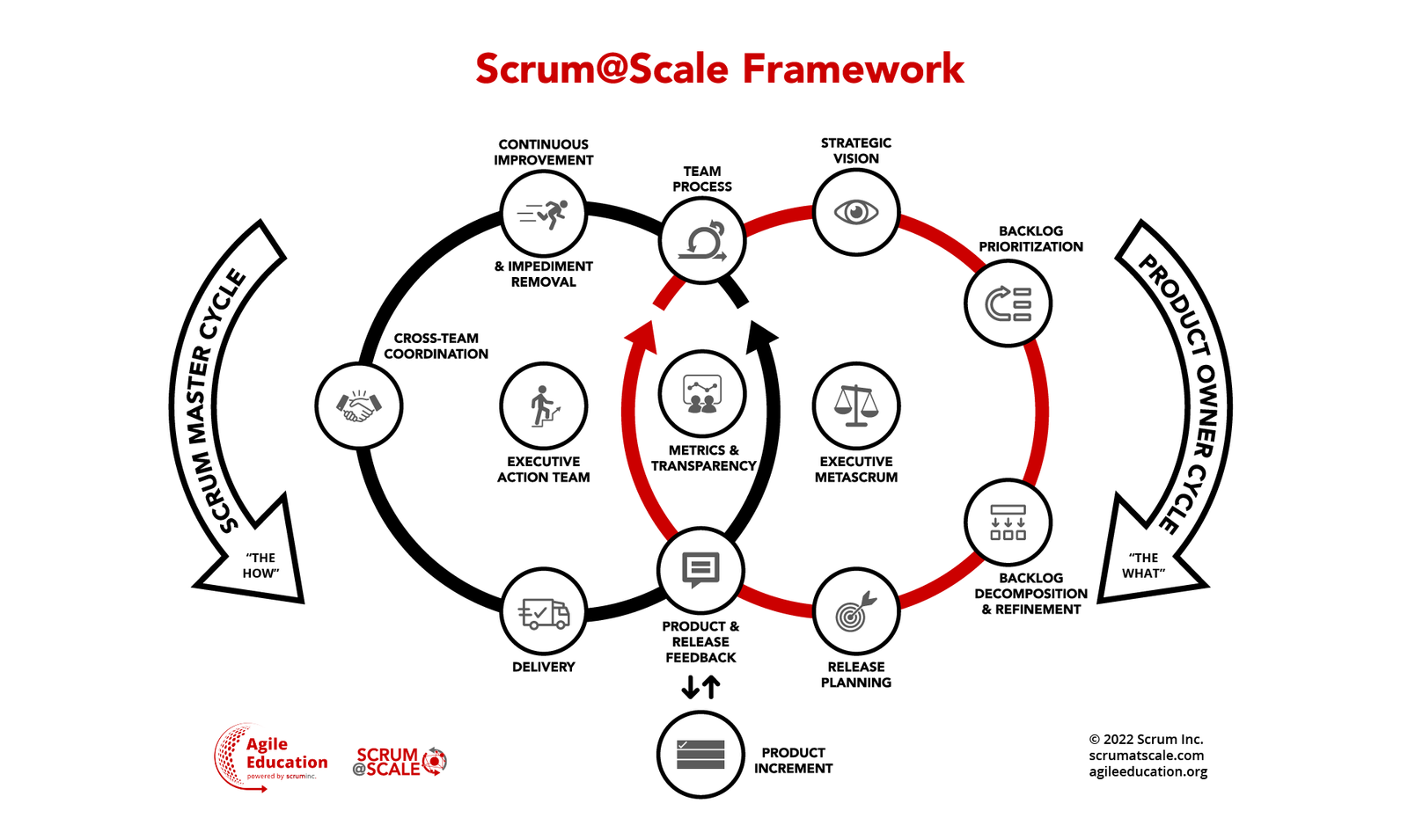
Scrum@Scale: Scaling Agile Excellence Discover Scrum@Scale, the framework that extends Agile practices across large organizations. Developed by Jeff Sutherland, a Scrum co-creator, it fosters enterprise-wide agility. Learn what Scrum@Scale is, its core principles, and how it empowers organizations to achieve Agile excellence at scale.
Read More »
Deciphering SAFe (Scaled Agile Framework): An In-Depth Exploration: In the realm of Agile methodologies, the Scaled Agile Framework (SAFe) is a widely adopted approach for scaling Agile practices in large organizations. This comprehensive guide dives into what SAFe is, its key concepts, principles, components, and the ways it empowers organizations to embrace Agile at scale.
Read More »
Unveiling Kanban: A Comprehensive Overview: Kanban is a powerful approach in the realm of Agile methodologies and Lean principles, enabling visualized work management, improved workflow efficiency, and a balance between demand and capacity. In this comprehensive guide, we explore what Kanban is, its principles, practices, and its broad applications across different industries and domains.
Read More »
Understanding User Stories in Agile: A Comprehensive Exploration: User Stories are a foundational concept in Agile development, serving as a cornerstone for defining and delivering valuable software products. In this comprehensive guide, we delve into what User Stories are, their key components, best practices, and their significance in Agile software development.
Read More »Understand the Sprint Goal, adaptable scope, Scrum events, and usable Increments, with a practical example based on the Scrum Guide.
Read More »
Complex Adaptive Systems (CAS) are networks of interacting agents that self-organize without central control. Learn the key characteristics, real-world examples, and why CAS theory is essential for understanding organizations, economies, and ecosystems.
Read More »
Systems thinking views the world as a network of interconnected elements, where changes in one part can have cascading effects throughout the entire system.
Read More »
Unveiling the Roles and Responsibilities of a Scrum Master in Scrum: The Scrum Master plays a crucial role in facilitating and ensuring the effective adoption of Scrum practices. In this comprehensive guide, we will explore the roles and responsibilities of a Scrum Master in Scrum, highlighting their vital contribution to fostering agility and delivering value within the organization.
Read More »
The Product Owner is a pivotal role in the Scrum framework. acts as the bridge between the development team and stakeholders, translating their needs and vision into actionable tasks for the team.
Read More »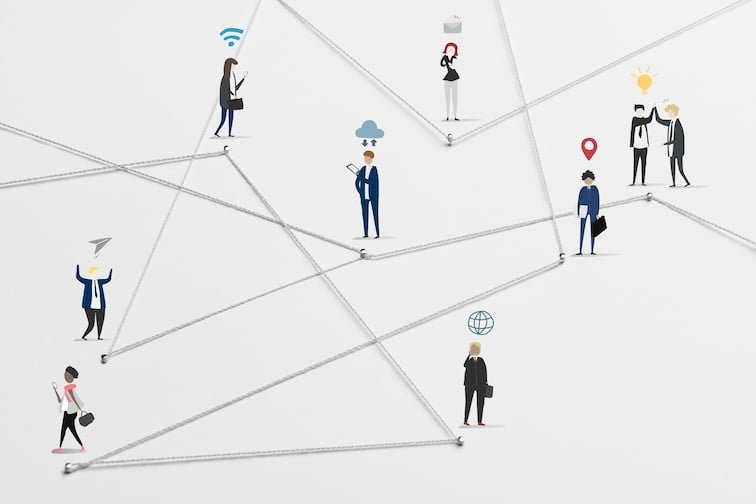
Decentralized Organization fosters agility, empowers employees, and enhances efficiency. In this comprehensive guide, we will explore what a decentralized organization is, its key characteristics, advantages, and its significance in modern business practices.
Read More »
PSM vs CSM vs RSM — compare all major Scrum Master certifications by cost, exam pass rate, training requirements, and renewal. Find out which certification from Scrum.org, Scrum Alliance, or Scrum Inc. is right for your career in 2026.
Read More »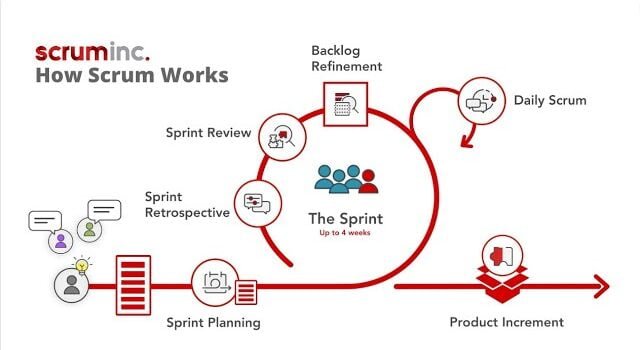
Scrum empowers both you and your Scrum team to swiftly inspect, adapt, and refine your product, processes, and plans. At its core, Scrum is based on the principles of transparency, inspection, and adaptation. It encourages teams to work collaboratively, deliver value incrementally, and continuously improve their processes.
Read More »
Agile isn’t merely a mindset shift or a fresh workstyle; it’s the vital life force organizations need to flourish in a world that’s ever-changing. In this dynamic and capricious realm of modern business, the skill to dance with transformations, meet evolving customer desires, and ride the waves of market shifts is the secret to sustained triumph.
Read More »
A systemic approach to Agile transformation emphasizes the interconnectedness of various elements in an organization. It suggests that the transformation should not just be limited to the processes but should also permeate the organizational culture, strategies, and structures.
Read More »
The Scrum framework is a prime example of a system that embodies the principles of emergence and interrelated entities.
Read More »
The use of Scrum patterns, combined with a systemic approach, provides teams with a set of proven solutions to common challenges and promotes continuous improvement. Overall, incorporating systems thinking into Scrum can help teams and organizations achieve higher levels of productivity, quality, and innovation.
Read More »