
Agentic Practices

Agentic AI for the Enterprise

Design, deploy, and govern autonomous AI systems that operate with purpose, accountability, and measurable business impact.

Agentic AI Advisory

From Assistive AI to Autonomous Capability

Agentic AI marks a shift from tools that respond to prompts toward systems that plan, act, and self-correct across multi-step workflows.

SysArt helps organizations move beyond conversational AI toward goal-directed agents that coordinate across systems, apply reasoning under uncertainty, and operate within well-defined governance boundaries. We bring deep experience in enterprise architecture, systems thinking, and delivery governance to ensure agentic deployments create durable value rather than fragile novelty.

Practice Areas

Six Pillars of Enterprise Agentic AI

01

Agentic Workflows

Agentic workflows enable AI systems to autonomously complete multi-step tasks with goal-directed behavior. Rather than responding to single prompts, these systems decompose objectives, maintain state across interactions, and adapt their approach based on intermediate results. In enterprise contexts, this translates to end-to-end process automation that handles exceptions intelligently.

  • Autonomous task decomposition and execution across complex business processes
  • Persistent state management and context retention across long-running operations
  • Adaptive error handling with fallback strategies and escalation protocols
  • Integration with existing enterprise workflows without disrupting established operations
02

Tool Use and Function Calling

Modern AI agents extend their capabilities by interacting with external systems through structured tool use and function calling. This practice covers how agents safely invoke APIs, query databases, trigger business logic, and compose multi-system operations. Reliable tool use is the bridge between AI reasoning and real-world action in enterprise environments.

  • Structured API integration with schema validation and error handling
  • Secure credential management and least-privilege access patterns for agent operations
  • Composable tool chains that allow agents to orchestrate multi-system transactions
  • Observability and logging for every external interaction to support audit and debugging
03

Multi-Agent Orchestration

Complex enterprise problems often require multiple specialized agents working together. Multi-agent orchestration defines how agents delegate tasks, share context, resolve conflicts, and converge on outcomes. Effective orchestration patterns enable organizations to build modular, scalable AI systems where each agent has a clear domain of responsibility.

  • Delegation patterns that route tasks to the most capable specialized agent
  • Shared memory and context protocols for coherent multi-agent collaboration
  • Conflict resolution mechanisms when agents produce contradictory recommendations
  • Hierarchical and peer-to-peer topologies tailored to organizational structure
04

Planning and Reasoning

Agentic systems derive their power from structured reasoning capabilities. Chain-of-thought, tree-of-thought, and reflection techniques enable agents to plan before acting, evaluate alternatives, and iteratively refine their approach. For enterprises, this means AI systems that can explain their logic, handle ambiguity, and improve their performance over successive interactions.

  • Chain-of-thought and tree-of-thought frameworks for transparent decision-making
  • Self-reflection loops that allow agents to evaluate and correct their own outputs
  • Iterative refinement strategies that improve accuracy across multi-turn interactions
  • Explainable reasoning traces that satisfy compliance and stakeholder review requirements
05

Governance and Safety

Deploying autonomous AI systems in enterprise environments demands rigorous governance. This practice area covers guardrails, human-in-the-loop checkpoints, audit trails, and responsible deployment frameworks. The goal is to enable agents to act with appropriate autonomy while maintaining the oversight and control that regulated industries require.

  • Configurable guardrails that constrain agent behavior within approved operational boundaries
  • Human-in-the-loop checkpoints for high-stakes decisions and irreversible actions
  • Comprehensive audit trails that capture every agent decision, action, and outcome
  • Alignment with EU AI Act, ISO 42001, and sector-specific regulatory frameworks
06

Implementation Maturity Model

Organizations progress through distinct maturity stages on their agentic AI journey, from basic task automation to fully autonomous, self-improving systems. This practice area provides a structured framework for assessing readiness, identifying gaps, and planning the investment, infrastructure, and cultural changes needed to advance responsibly.

  • Five-stage maturity framework: from rule-based automation to autonomous orchestration
  • Organizational readiness assessments covering technology, talent, data, and governance
  • Phased roadmaps that balance ambition with operational stability and risk tolerance
  • Benchmarking against industry peers and measurable KPIs for each maturity level

SysArt

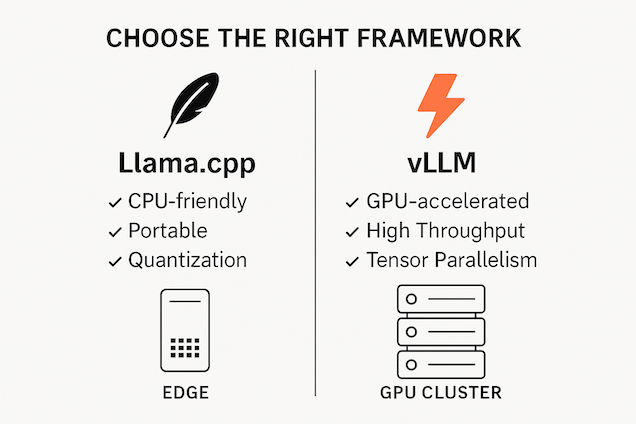
Choosing the Right Foundation Model

Model selection is a strategic decision that shapes agent capability, cost structure, and compliance posture. We help organizations evaluate foundation models against their specific use cases, data constraints, and deployment requirements.

Choosing the Right Foundation Model

SysArt

Ready to Build Agentic Capability?

Whether you are exploring your first agentic use case or scaling autonomous systems across the enterprise, SysArt can help you define the architecture, governance, and delivery approach that fits your context.

Contact Us